
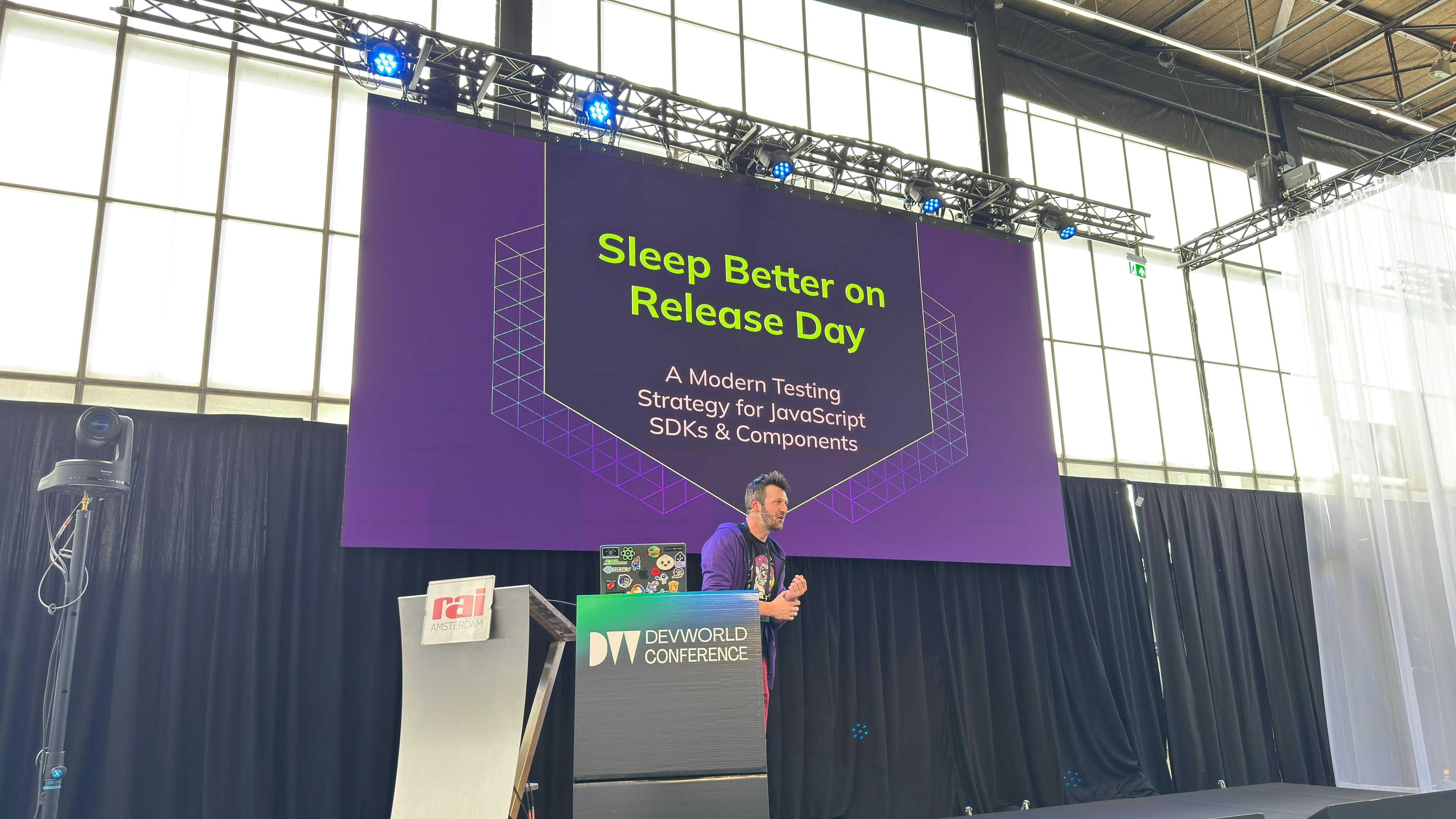
Presented at DEVWorld Amsterdam 2026 to 5,000 combined attendees. A practical guide to validating complex JavaScript SDK ecosystems - covering the Integration Matrix, the Timeline Strategy for catching browser-engine regressions weeks early, and AI Models Interoperability for non-deterministic AI features.
Released: Thu May 07 2026
What the talk was about
At the beginning of my career, Thursdays were defined by a single painful ritual: manually clicking through every button in a DXP to catch regressions. Over time that got automated. Later, managing dozens of SDKs and starters at Kontent.ai taught me how to keep a distributed ecosystem consistent.
CKEditor is a whole new level of complexity. Providing an open-source core alongside premium plugins means validating a massive plugin-based architecture where open modules interact with commercial ones - across customer environments, browser versions, and types. This talk ignored the standard Testing Pyramid and went straight to the three strategies that actually work at this scale.
The three pillars
- The Integration Matrix - testing across frameworks (React, Vue, Angular, Next.js), bundlers (Vite, webpack), and browser engines. Running sanity checks broad, deep tests targeted.
- The Timeline Strategy - using canary browser lanes to catch upstream engine regressions weeks before they reach stable. A Chrome spec change was caught 3 weeks early via a PR on a nightly build lane.
- AI Models Interoperability - automating tests for generative AI features where "exact match" assertions are impossible. Mocking for determinism, precision prompts to eliminate flakiness, and LLM-as-judge for semantic evaluation.
The venue
DEVWorld Amsterdam 2026 - one of the bigger stages I've been on. 5,000 attendees on-site and online combined. The whole talk was built on real CKEditor work, with six teammates who shared their domain knowledge and real use-cases to make the examples genuine.